|
|
|
|
|||
|
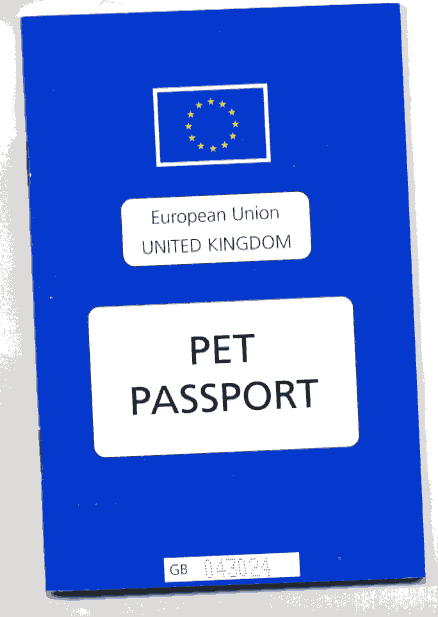
The Pet Travel Scheme has been simplified considerable for animals that travel within Europe. To qualify your pet will need to have a microchip inserted between his shoulder blades and a vaccination against rabies. That is all you need to do now. We will issue you with a Pet Passport and, after a waiting period of three weeks you will be able to travel freely within Europe until a booster injection is required after two years. The only other requirement is that before you return to the UK between 24hrs and 120hrs of your expected arrival you will need to find a Vet to administer a tapeworm treatment. This is to prevent the tape worm Echinococcus multilocularis becoming established in this country. This parasite, also known as the fox tape worm, is found in Germany, France and other parts of Europe and can cause serious liver problems in people. It is no longer compulsory to have your pet treated for ticks before you return home. Ticks can be a real problem for dogs that travel in Europe and we would strongly advise that you give preventative treatments before you travel and to make sure that they will remain effective until your return. We do not have to carry out a blood test now to check that the rabies vaccine has been effective and there is no waiting period of six months before you can return home. We have had very few blood test failures with the vaccine we use and have always been carefully to administer it on its own to only healthy animals. Also, for regular travelers, it will be relatively simple to continue with your passport if you have missed your rabies booster dates. There are now several carriers and route that you can use. You will need to check the exact requirements before you book so look at the Pet Travel Scheme Web Site for more details.It is only possible to use official carriers. Animals will not be permitted entry by other routes even if they have the correct documentation they will have to go through a period of quarantine. It is important that you follow the rules and not try to import animals that do not qualify for entry. If you have any queries about the Pet Travel Scheme or need to know more about traveling to countries outside Europe please get in touch by phone or e mail CliveNorrell@Compuserve.com
Some countries have residency requirement for cats and dogs. If you are going to live abroad with your pets for more than three months you must contact a Veterinary Surgeon and find out what the requirements are in that particular district. Before You Go. Two weeks before you are due to travel it is wise to visit the surgery so that we can check that your Pet Passport is in order, that your companion is fit to travel and that the microchip is still working. Depending on where you are going you will need to consider the risk from the following diseases as ticks are much more of a problem in Europe than they are here. Ticks and Sand flies can carry some very unpleasant diseases that are difficult to diagnose and treat. Babesiosis is caused by a protozoan organism in the blood that behaves in a similar way to malaria in man. The organism multiplies within the red blood cells damaging them to cause fever and anaemia. There are different strains of the parasite, but all of them are sent into the blood stream by an infected tick. Cats as well as dogs can be affected and it can take several years between the initial infection before symptoms are seen. Bartonella is a bacteria found in the blood of rodents that can infect cats. Ticks and fleas are thought to transmit this infection although many hosts may show no symptoms until stressed or treated with immuno surpressive drugs. Borrelia is a bacteria passed on particularly by Ixodes ticks that are common on sheep in this country. This is lymes disease that will cause flu like symptoms in dogs at first that soon results in swollen painful joints. Ehrlichia is a small bacterium that multiplies within the white blood cells of its host. These are the cells that are supposed to eliminate infections, but some how they manage to survive and damage the platelets in the blood stream that interferes with the blood clotting system. These bacteria rely on tick to take them to their host animal. Leishmaniasis is a protozoan organism that is transmitted by sand flies. It is a chronic disease resulting in weight loss and enlarged lymph glands. Affected animals will have skin lesions particularly on their face that are disfiguring but do not usually cause the animal to scratch or rub. This is transmitted by sand flies that are found in the hotter countries in Europe such as Spain, the south of France and Italy. These insects are only active at dusk and during the night. Insecticidal collars have been developed to protect dogs from sand fly bites, but they will not be able to stop all of the bites so it is better to animals indoors from dusk to after dawn if you can. I think that the safest way is to ensure that your dog is protected against ticks is to use a suitable insecticide throughout your stay abroad. Frontline is quite safe, there is no problem with treatments being duplicated to get your re entry documents completed so it is better to be prepared for this danger. It would seem that the spray is best to stop ticks before they are able to bite. The recommendation is that the spray should be used every two weeks if you are in a high risk area paying particular attention to the legs, neck and chin as these are the places we most commonly have to remove the parasites from. Intervet have developed an collar to use when visiting the mediterranean countries to stop bites from sand flies that transmit leishmaniasis. There is more about this on the Scalibor site. The University of Bristol are researching the diseases that arthropods can transmit to our pets. They run the Acarus Web Site which may help you to find out more information if you need it.Rabies is a serious zoonotic disease. It is estimated that between 60,000 and 100,000 people, mainly children die of rabies in the world each year after a bite from an animal that is carrying the virus. The highest death toll is in India, Bangladesh and Africa. Rabies is on the increase even in the developed world. After a bite the virus moves only slowly through the nervous system towards the brain. It will take between ten days and four months before it becomes established in the central nervous system and is then untreatable. After a bite from an animal in countries where rabies is endemic the wound should be thoroughly cleaned and disinfected with a product such as surgical spirit. Post exposure medical treatment involves the use of an inactivated rabies vaccine which is strongly immunogenic and the use of human rabies immunoglobulin which is prepared from the plasma of hyperimmune donors. These treatments are very effective at preventing the onset of clinical rabies. Approximately 40,000 people are treated like this in America each year with excellent results. You should also be aware that Rabies is by no means un common in Poland, The Check Republic, parts of Germany and Russia. Do not be fooled in to thinking that all dogs with Rabies foam at the mouth and bite the nearest thing that moves. In the early stages this is a very difficult disease to diagnose so you should take great care not to approach animals in areas where it it endemic. Always seek medical advise if you have been bitten by an animal when on holiday. There is specific information about the risk of Rabies in different European countries at the Rabies Bulletin Europe. At the top of the page click on New Current Issues the look at the map or the specific country maps listed on the left hand side as these will show where in the countries Rabies cases have been confirmed in the last period that information was available. From time to time things change with the Travel Scheme. Whenever we get any enquiries we consult the Web Site to make sure that there have not been any further changes. This has been up dated and can be found at the Pet Travel Scheme site.Or there is a help line number you can try 0870 241 1710 The Pets Travel Scheme seems to be operating quite smoothly. I would be grateful if you could let us know of any problems that you have encountered so that we can advise pet owners accordingly. Please keep in touch with us by e mail if you can CliveNorrell@Compuserve.comFoot Note Since the changes to the Pet Travel Scheme in January 2012 there have been reports of animals, particularly puppies arriving in this country with no travel documents and presumably no vaccinations against rabies. This is a worrying trend as we only get to know about animals that have turned up at Veterinary Practices for treatments and there could be many more that are here undetected. Please let us know if you have any suspicions of animals that might not have full travel documents. Traveling in the United Kingdom Sometimes travel here can be difficult as it is not always easy to find accommodation that will welcome pets and often in the summer it is not always easy to find a beach where dogs can go. It is certainly not good that dogs should be allowed to foul on a beach at any time of the year. If your animals have been trained properly there is no reason why they should be a nuisance to others. Dogs like their holidays as much as we do. Please let us know about beaches you visit which dogs can enjoy throughout the year. There is a growing web site for hotels and Guest houses that welcome Pets. If you are planning a trip you may find the following link to Pet Friendly Hotels useful. |
|||